How IP67 Rugged Tablets Support Factory Production Line Management
Industrial tablet deployments on active factory floors aren’t about flashy specs—they’re about surviving shift after shift of coolant splashes, metal shavings, accidental drops onto concrete, and workers wearing gloves while scanning work orders. The Onerugged P15R panel PC wasn’t selected for a major household appliance manufacturer because it looked good in a spec sheet. It earned its place after weeks of field testing alongside legacy paper systems and consumer-grade tablets that failed within days.
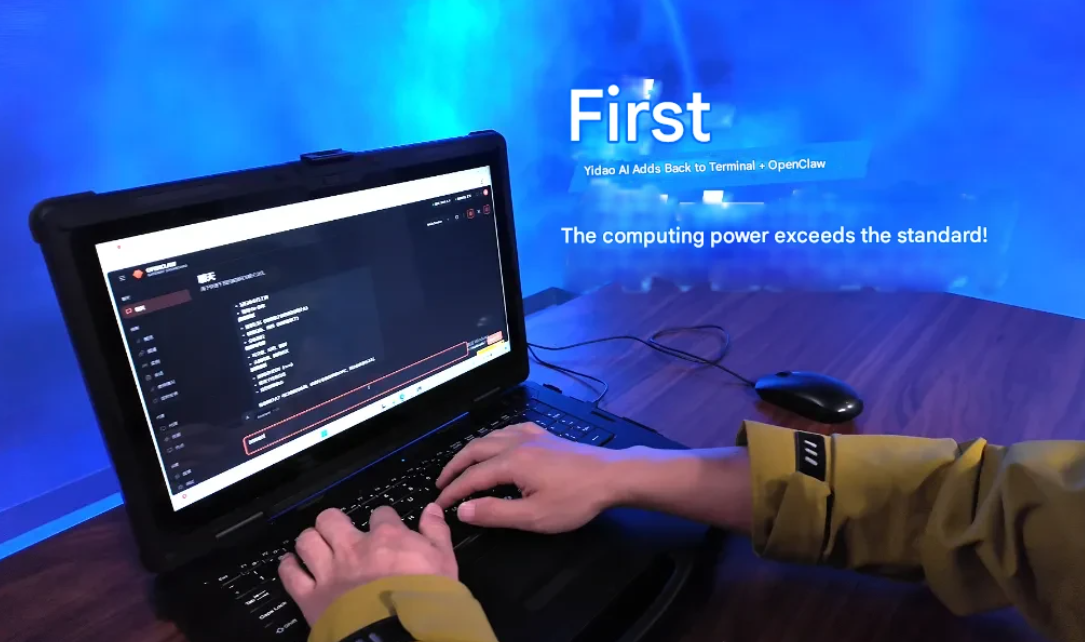
Factory Production Line Management with IP67 Sealing
IP67 isn’t just a rating—it’s the difference between a device staying online during washdown cycles near assembly stations or shutting down mid-shift. In this deployment, the P15R’s full front-seal design kept dust and incidental water ingress out across 60+ units installed directly at workstations. No enclosures. No external housings. Just direct mounting into existing control panels—cutting integration time and eliminating secondary failure points common with retrofit solutions.
Sunlight-Readable Display in High-Ambient Light Zones
Production lines often run under high-bay LED lighting—and sometimes near open loading docks where daylight floods in. The P15R’s 1200-nit display wasn’t over-engineered; it was necessary. Workers reported immediate improvement in readability without adjusting brightness or repositioning the unit—critical when verifying torque specs or checking real-time QC flags during fast-paced assembly.
MES Integration Without Middleware Overhead
This wasn’t a standalone tablet rollout. It was a targeted MES extension: ID card login → automatic workstation assignment → live instruction push → labor time capture. The P15R runs Android with native support for broadcast intents, key mapping, and OTA updates—all built into the rugged handhelds and panel PC firmware stack. That meant no third-party agent software, no extra Windows licensing, and no custom drivers slowing down deployment across 60 units.
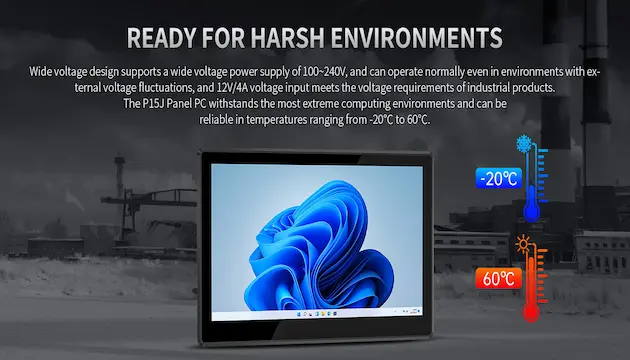
Glove-Touch Response in Real Shift Conditions
Workers used standard factory-issued cotton/polyester blend gloves—not specialty touchscreen gloves. The P15R’s projected capacitive touch layer was calibrated for consistent response across that material thickness and surface moisture (common from hand sanitizer or ambient humidity). No recalibration needed between shifts. No ‘tap-and-hold’ workarounds. Just reliable, repeatable input—reducing restarts and minimizing training friction during rollout.
Long-Term Reliability in Continuous Operation
The P15R runs 24/7 in kiosk mode—no sleep, no hibernation. Its thermal design handles sustained CPU load during parallel barcode scanning, MES polling, and local logging without throttling. Unlike consumer tablets that degrade rapidly under constant backlight and processor use, these units maintained stable performance after six months of operation—verified through routine health checks by the client’s maintenance team. For context, earlier attempts with off-the-shelf Android tablets required replacement every 4–5 months due to battery swelling and touch controller drift.
For buyers evaluating hardware for similar environments, durability isn’t measured in lab drop tests alone—it’s measured in uninterrupted uptime across three shifts, zero unplanned replacements in Year One, and seamless integration into existing rugged tablets workflows. The P15R delivered that—not as a promise, but as an operational fact.
Learn more about how purpose-built industrial hardware supports long-term digital transformation in demanding settings: industrial PC resilience beyond ratings.


评论
发表评论