How IP67 Rugged Vehicle PCs Support New Energy Vehicle Logistics
When a new energy vehicle (NEV) manufacturer in China rolled out its first fully digital logistics system across a new factory, reliability wasn’t optional—it was the baseline. Forklifts operating 16 hours a day in high-humidity staging bays, tow trucks moving battery modules between assembly lines, and operators scanning pallets in gloves and safety vests demanded hardware that wouldn’t blink. That’s where the Onerugged V10J Vehicle PC entered—not as a pilot gadget, but as an embedded operational node.
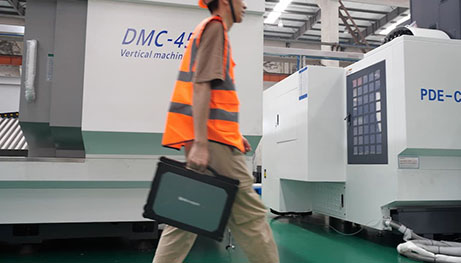
Warehouse Staging with MIL-STD-810G Shock Resistance
Forklift-mounted devices take repeated jolts—especially when transitioning from concrete floors to grated metal ramps or navigating uneven dock plates. The V10J is certified to MIL-STD-810G for shock, drop, and vibration. That means it survives real-world forklift operation without internal component fatigue or display delamination—no reboots mid-task, no recalibration drift after a 30-cm drop onto packed gravel. For IT teams managing hundreds of units, this translates directly into fewer depot returns and less time spent chasing intermittent touchscreen glitches during shift handover.
Outdoor Loading Docks with 1200-Nit Sunlight Readability
At many NEV plants, loading docks are semi-outdoor: open on one side, exposed to direct sun in summer and rain-splashed glare in winter. Consumer tablets wash out at 500 nits. The V10J delivers 1200 nits—enough to maintain legible task prompts and barcode scan feedback even under midday sun. No hoods, no tilt adjustments, no squinting. Operators keep eyes on the load—not on the screen.
Real-Time Inventory Sync with Dual-Band Wi-Fi 5 + 4G LTE
The V10J doesn’t rely on a single connectivity path. Its integrated Wi-Fi 5 handles local WMS traffic inside warehouse zones, while 4G LTE maintains ERP sync when vehicles move between buildings or park outside coverage boundaries. That dual-path design eliminates the ‘dead zone’ gap common with Wi-Fi-only vehicle PCs—critical when confirming battery pack serial numbers before they enter the final assembly line. No manual re-entry. No delayed updates. Just continuous, deterministic data flow.
Secure Fleet Access with Fingerprint Authentication
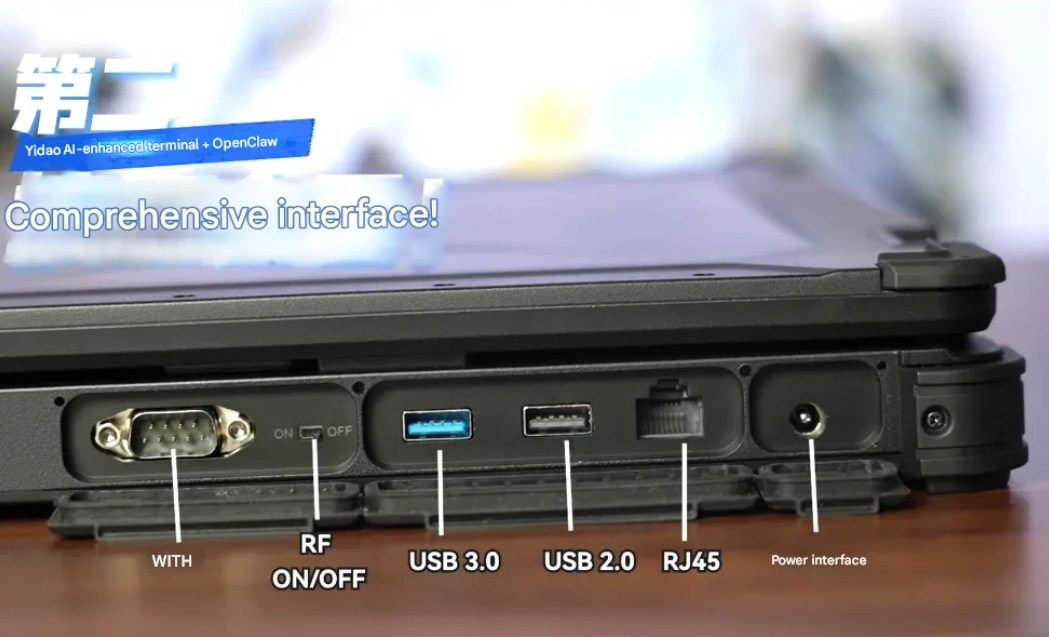
In high-value logistics environments—like moving traction batteries or powertrain modules—device access isn’t about convenience. It’s about accountability. The V10J supports external fingerprint readers via its M12 aviation-grade connector. Paired with the onboard MDM system, it enforces role-based task visibility and logs biometric authentication events—not just device login, but *who* moved *which* asset, *when*, and *where*. This fits naturally into existing compliance workflows for automotive Tier-1 suppliers—and integrates cleanly with rugged tablets deployed elsewhere in the plant.
Factory-Floor Mounting with VESA + RAM Compatibility
Mounting isn’t an afterthought—it’s part of uptime planning. The V10J ships with both VESA 75mm and RAM ball-mount interfaces, letting maintenance teams use standard brackets already installed on forklift cabs and AGVs. No custom fabrication. No bracket fatigue testing. And because it uses M12 locking connectors—not USB-C or micro-USB—the cable stays seated through daily vibration cycles. That’s not just durability; it’s install-and-forget predictability for procurement and facilities teams evaluating long-term TCO.
For teams deploying across mixed fleets—or scaling from pilot to plant-wide rollout—the V10J’s Windows OS compatibility, OTA update support, and seamless pairing with industrial barcode scanners make integration tangible, not theoretical. It’s built for what happens *after* the spec sheet: rain on the dock, dust in the staging lane, and the 3 a.m. shift change where every second counts. You’ll find more context on how these specs hold up in volatile settings in our deep dives on rugged tablets for hazardous areas and deploying rugged tablets across multi-site operations.


评论
发表评论