How IP67 Vehicle PCs Support Fleet Management in Heavy-Duty Transport
Onerugged’s Vehicle PC line targets a very specific operational reality: computing hardware that stays functional—not just powered on—while mounted inside forklifts, delivery trucks, and construction machinery. These aren’t office tablets repurposed for the field. They’re built to survive voltage spikes during engine cranking, condensation from rapid temperature shifts, and daily vibration from uneven terrain. The design decisions reflect what fleet managers and vehicle integrators actually report as failure points—not theoretical stress tests.
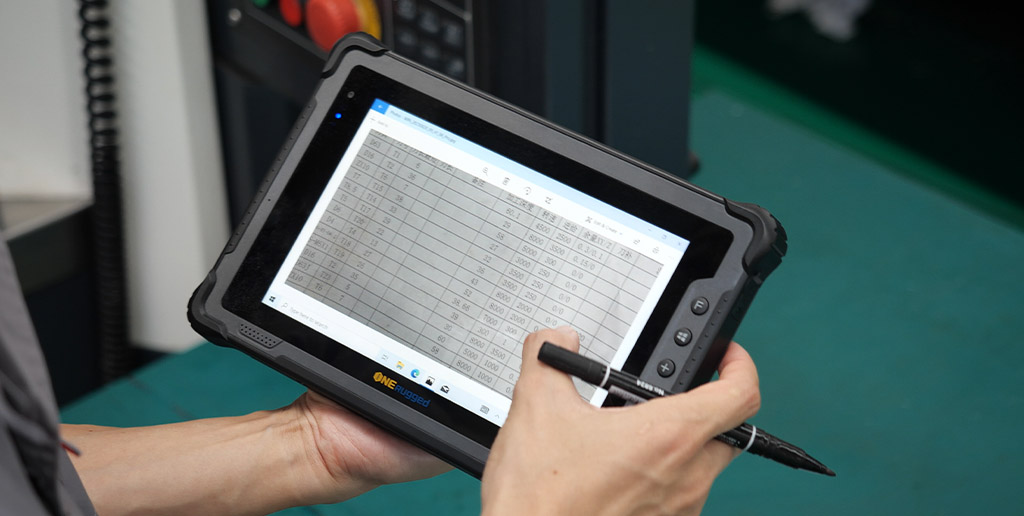
Fleet Management with IP67 Sealing
IP67 isn’t just a checkbox—it’s the difference between a unit surviving a wash-down cycle or failing after three months of exposure to road salt and brake dust. In transport and logistics depots, vehicles are routinely pressure-washed. That means water ingress at seams, connectors, and mounting brackets is a real risk. IP67 certification confirms full dust-tightness and submersion up to 1 meter for 30 minutes—critical when tablets are mounted near open cargo bays or under dashboards where moisture accumulates.
Heavy-Duty Machinery Mounting with 6–36V Wide-Range Input
Voltage instability is one of the top causes of premature electronics failure in mobile industrial environments. Unlike consumer-grade power supplies, Onerugged’s Vehicle PCs accept 6–36V DC input—covering everything from older 12V truck batteries (which can dip below 10V during cold starts) to modern 24V commercial fleets and even 36V electric forklift systems. The integrated ACC sensing ensures automatic wake/sleep without external relays—reducing integration complexity for system integrators deploying across mixed-fleet environments.
Outdoor Visibility with 750-Nit Displays
A display that looks sharp in an air-conditioned office vanishes in direct sun. The V12R’s 750-nit peak brightness isn’t marketing fluff—it’s measured under real ambient conditions and calibrated for readability with standard work gloves. That matters for drivers and technicians who glance at route instructions or asset status while standing beside a trailer in midday heat. It also reduces eye fatigue over long shifts—something frontline users consistently cite in usability feedback, not surveys.

GNSS Positioning with Dual-Satellite Support
GPS alone often fails under dense tree cover or urban canyons. That’s why both the V82T and V12R include multi-constellation GNSS (GPS/Beidou/GLONASS/Galileo/QZSS) and optional RTK support. For transport operations managing yard movements or last-mile delivery windows, consistent positioning accuracy—even during brief signal loss—is tied directly to dispatch efficiency and driver accountability. External SMA antenna ports let integrators route GPS signals away from metal obstructions, a practical fix often overlooked in off-the-shelf mounts.
Industrial Connectivity Beyond Wi-Fi 5
Wi-Fi 5 (802.11ac) is standard—but more important is what’s offered as options: 4G LTE modules with SIM slots, Deutsch connectors for harsh-environment cabling, and CAN bus interfaces for direct vehicle telematics integration. These aren’t add-ons for ‘future-proofing’. They’re deployment-ready paths for connecting to existing fleet management software, telematics gateways, or legacy radio dispatch systems—without requiring custom interface boxes or protocol converters.
For procurement teams evaluating long-term value, the combination of IP67 sealing, MIL-STD-810H shock/vibration compliance, and ISO16750 road vehicle testing means fewer field replacements and less downtime per unit over 3–5 years. That durability translates directly into lower TCO—especially when compared to consumer tablets retrofitted with third-party mounts and external power regulators. You’ll find more detail on rugged tablets in aerospace contexts, and how similar environmental hardening applies across mobile industrial use cases. Likewise, the thermal resilience covered in our extreme temperature deployment guide is validated under the same ISO16750 test cycles used for these Vehicle PCs.
If you're specifying hardware for mixed-fleet deployments—or integrating with existing MDM platforms—the Onerugged Vehicle PC portfolio delivers predictable performance where it counts: inside the cab, on the loader arm, and next to the hydraulic controls.


评论
发表评论