Outdoor Rugged Tablets with 1200 Nits for Field Service Workflows
Field service teams don’t get the luxury of controlled lighting, climate, or stable surfaces. Whether it’s a utility technician checking a substation at noon in Arizona or a telecom field engineer troubleshooting fiber nodes on a coastal ridge, screen visibility isn’t optional — it’s operational baseline. That’s why brightness specs like 1200 nits aren’t marketing fluff. They’re what separates a device you can actually use outdoors from one you end up shielding with your hand or stashing in a bag until you reach shade.

Field Service Dispatch with 1200 Nits Sunlight Readability
Most consumer-grade tablets top out around 500–600 nits. In direct sun, they wash out completely — forcing repeated squinting, manual brightness adjustments, or even workflow pauses while users retreat to shelter. A 1200-nit display doesn’t just improve legibility; it sustains task continuity. Technicians can verify work orders, scan asset tags, and annotate schematics without losing rhythm — even mid-afternoon on an open rooftop or beside a roadside cabinet.
This isn’t about pixel perfection. It’s about reducing cognitive load when ambient conditions are already demanding: wind, glare, gloves, and time pressure. Real-world usability starts with being able to see the screen — reliably, every time.
Vehicle Mount Integration and Glove-Touch Response
Many outdoor workflows involve frequent transitions: stepping out of a service van, mounting the tablet on a dash or console, then moving to equipment access points. The Onerugged outdoor rugged line is built with this motion in mind — not just as a spec sheet exercise. Devices feature precise capacitive tuning that responds consistently with standard work gloves (not just ‘glove mode’ toggles that degrade accuracy). That means fewer missed taps on critical buttons during safety checks or dispatch confirmations.
Mount compatibility matters too. These units are designed with standardized VESA patterns and reinforced bezels — no jury-rigged brackets or adhesive failures after three months of vibration on rural highways.
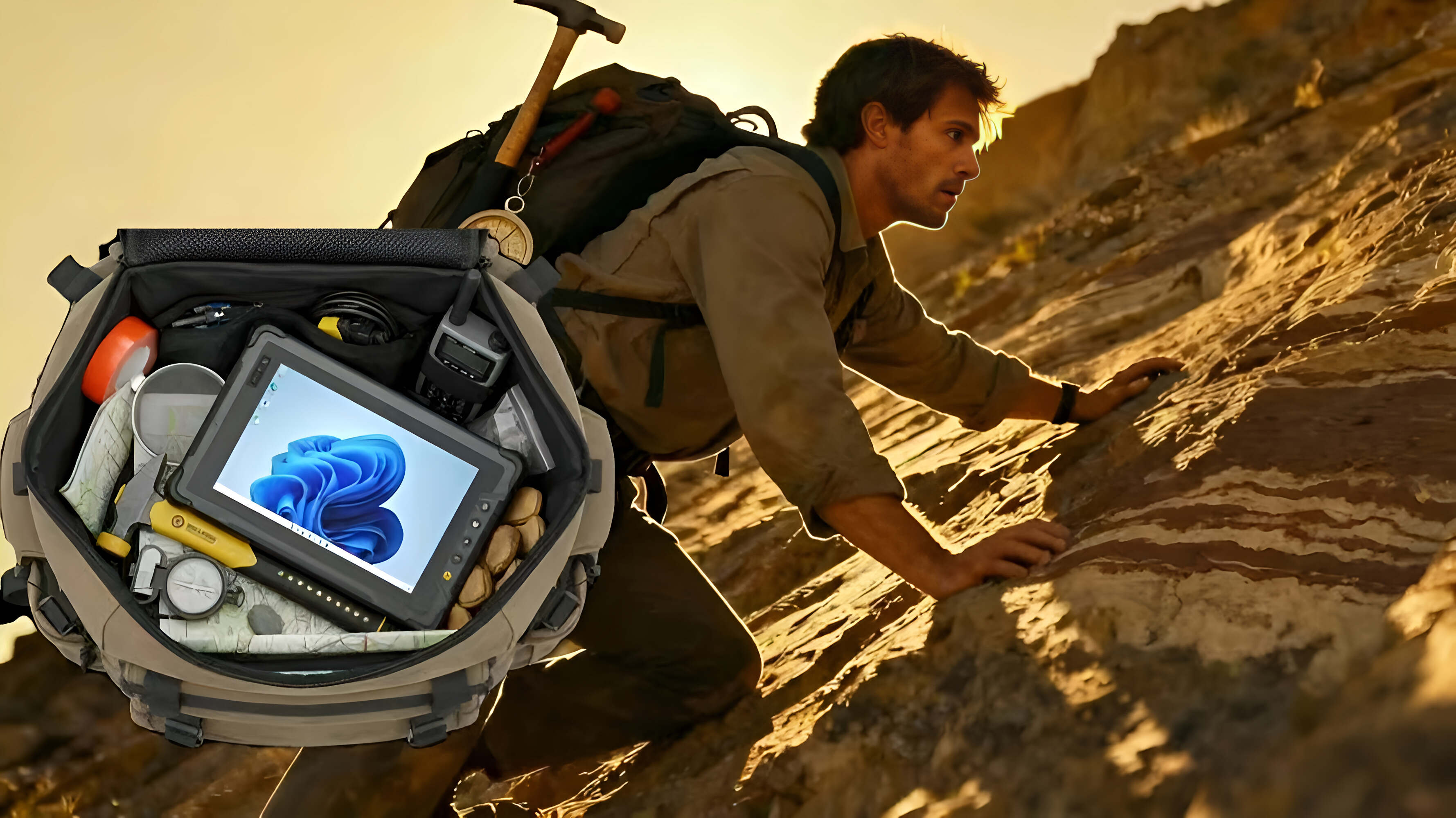
Durability Without Compromise: IP67 and MIL-STD-810G Tested
IP67 sealing and MIL-STD-810G certification aren’t checkboxes — they’re validation of real-world resilience. Dust ingress? Covered. Brief submersion during rain-soaked site entry? Handled. Repeated drops onto asphalt or gravel? Expected. What sets these devices apart isn’t just passing lab tests — it’s how the sealing integrates with ports, buttons, and battery compartments without adding bulk or compromising serviceability.
For procurement teams evaluating total cost of ownership, this durability translates directly into longer field life and fewer replacement cycles. You’ll find deeper context on how rugged tablets reduce TCO in our dedicated guide on rugged tablets. Likewise, those operating in extreme temperature swings — think desert summer or northern winter deployments — will want to reference our analysis of rugged tablets tackling thermal extremes.
Why This Matters for Daily Workflow Integrity
- No screen blackout under full sun — verified at 1200 nits, not peak burst
- Glove-touch responsiveness tested with common leather and synthetic work gloves
- IP67 + MIL-STD-810G applied across full product family — not just select SKUs
- Designed for mounting, not just handheld use — consistent ergonomics across vehicle and pedestrian modes
If your team spends more than 30% of their day outside, or relies on mobile data capture in unsheltered environments, screen visibility and physical resilience aren’t secondary features — they’re foundational requirements. For deeper technical alignment with Windows-based field systems, explore how industrial PC platforms integrate with existing MDM and kiosk-mode workflows.


评论
发表评论