Rugged Tablets for Energy and Utilities with Sunlight-Readable Displays
Field teams in energy and utilities don’t get second chances at data capture — especially when inspecting substations at noon, scanning meters in desert heat, or troubleshooting grid assets under open sky. That’s why sunlight readability isn’t a ‘nice-to-have’ — it’s non-negotiable. ONERugged’s rugged tablets deliver consistent 1200 nits brightness, enabling legible screen operation even in direct outdoor exposure. This isn’t about marketing claims; it’s about eliminating squinting, re-scans, and misread values during critical infrastructure checks.

Grid Inspections with 1200 Nits Sunlight Readability
When field technicians use tablets to log transformer temperatures or verify relay settings, ambient light can wash out standard displays. ONERugged’s 1200 nits panels maintain contrast and touch responsiveness without requiring shade tents or repeated device repositioning. Real-world deployment shows fewer workflow interruptions — not because of software tweaks, but because the hardware meets environmental demand head-on.
Why Glove-Touch Matters During Winter Grid Checks
Cold-weather inspections often happen with insulated gloves. ONERugged tablets support reliable multi-touch input even with standard work gloves — no stylus dependency, no calibration drift. This is built into the digitizer layer, not added via firmware patches. It holds up across temperature swings from -20°C to 60°C, aligning with typical utility service ranges across North American and European transmission corridors.
For procurement managers evaluating long-term value, this spec directly reduces task time per inspection and lowers the risk of missed entries due to poor visibility or unresponsive screens. It also supports longer battery life in high-brightness mode — a practical advantage over consumer-grade tablets that throttle performance or dim aggressively under load.
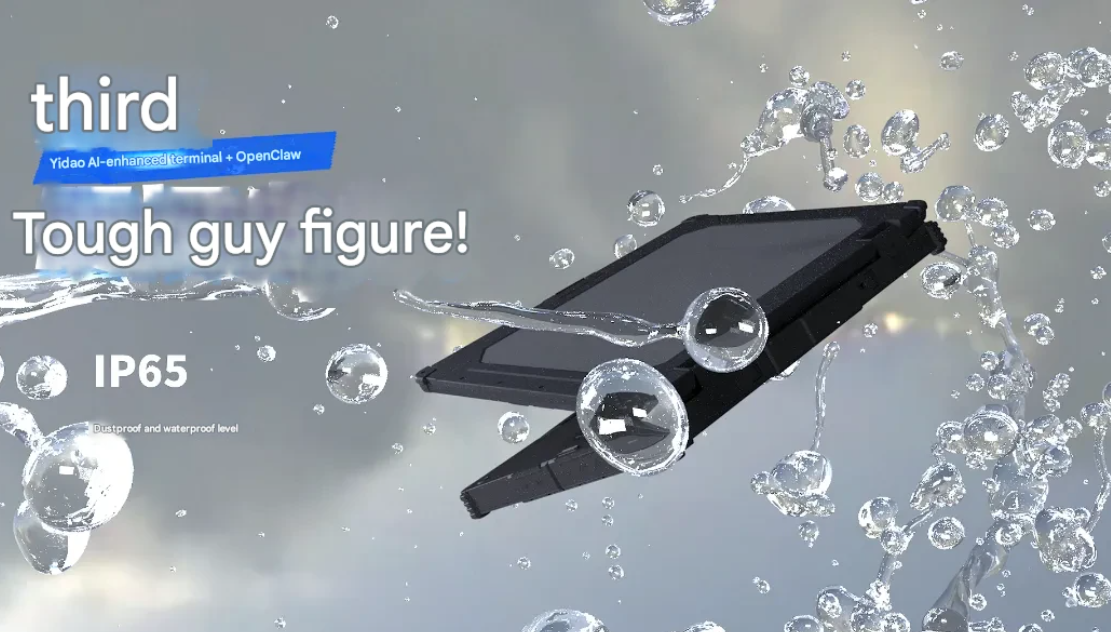
Real-Time Meter Reading with IP67 Sealing
Automated meter reading (AMR) often happens in damp basements, muddy utility vaults, or rain-soaked pad-mounted transformers. IP67 sealing means these devices survive full immersion up to 1 meter for 30 minutes — not just dust resistance. That’s relevant when tablets are set down on wet concrete, dropped into flooded trenches during storm response, or stored in humid equipment trailers overnight.
MIL-STD-810G Drop Durability for Field Mobility
Technicians carry tablets while climbing ladders, navigating gravel yards, or stepping off service vehicles. A 1.2-meter drop onto concrete is a routine stress test — not an edge case. ONERugged’s MIL-STD-810G certification covers this exact scenario. Unlike lab-only ratings, this standard includes repeated drops across multiple orientations and surface types, reflecting how devices actually move through daily utility workflows.
These aren’t theoretical specs. They map directly to operational realities covered in rugged tablets used across regulated infrastructure environments — including humidity, particulate, and impact exposure profiles similar to those found in substation maintenance and distribution line work.
For teams building scalable digital inspection programs, durability and visibility converge where reliability starts: at the device level. That’s why enterprise buyers increasingly treat display brightness and ingress protection as foundational requirements — not afterthoughts. You’ll find these features consistently across ONERugged’s industrial PC and rugged tablets lines — all designed for repeatable field use, not one-off demos.
Explore the full range of purpose-built hardware at Onerugged.


评论
发表评论