Rugged Tablets for Energy and Utilities with Sunlight-Readable Displays
Field teams in energy and utilities don’t get the luxury of ideal lighting or climate-controlled offices. Whether inspecting transmission lines at dawn, scanning meters in desert heat, or troubleshooting substations under midday glare, device readability isn’t a convenience — it’s operational continuity. That’s why sunlight-readable displays aren’t optional extras; they’re baseline requirements for any tablet deployed outdoors or in unshaded industrial zones.
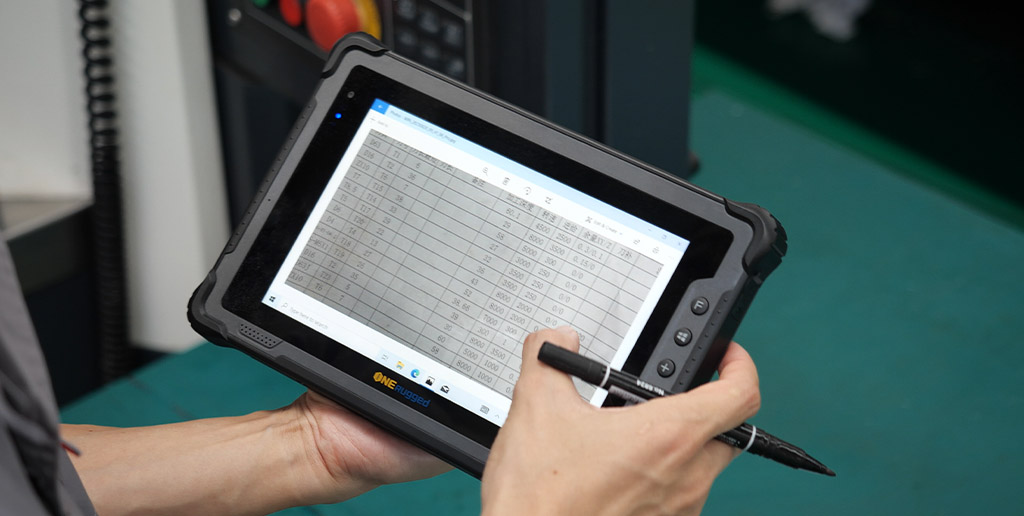
Grid Inspections Under Direct Sunlight with 1200 Nits Display
ONERugged’s rugged tablets — including models like the M10A and M10J — feature 1200-nit brightness. In practice, this means text, maps, and live camera feeds remain legible even when held vertically in full sun. Unlike consumer-grade tablets that wash out at 500–700 nits, these devices maintain contrast and touch responsiveness without requiring shade tents, screen hoods, or repeated device repositioning. For crews conducting real-time grid inspections or automated meter reading, that translates directly into fewer missed readings and less time spent adjusting hardware instead of doing work.
Why brightness alone isn’t enough: anti-reflective coating + optical bonding
High nits matter, but only when paired with optical bonding (gluing the display layer to the cover glass) and an anti-reflective surface treatment. ONERugged applies both. This combination cuts ambient light scatter — critical when working near reflective surfaces like transformer housings or solar farm panels. It also reduces eye fatigue during extended outdoor shifts, which supports sustained focus and data accuracy.
For procurement managers evaluating long-term value, this spec directly ties to reduced device abandonment rates. A tablet that stays usable across seasonal lighting changes — from low-angle winter sun to high-intensity summer glare — avoids the common pitfall of mid-cycle refreshes driven by poor visibility rather than hardware failure.
On-Site Operation in Dusty Substations with IP65 Sealing
Substation environments combine fine conductive dust, occasional moisture ingress, and vibration from nearby switching operations. IP65-rated enclosures — standard across ONERugged’s rugged tablets and industrial PC lines — seal against low-pressure water jets and prevent dust accumulation inside critical components. Unlike IP54 units that may pass lab tests but fail in field-deployed scenarios with airborne metallic particulates, IP65 provides verified protection for daily use in exposed infrastructure settings.
Maintenance Management Across Temperature Extremes with MIL-STD-810G
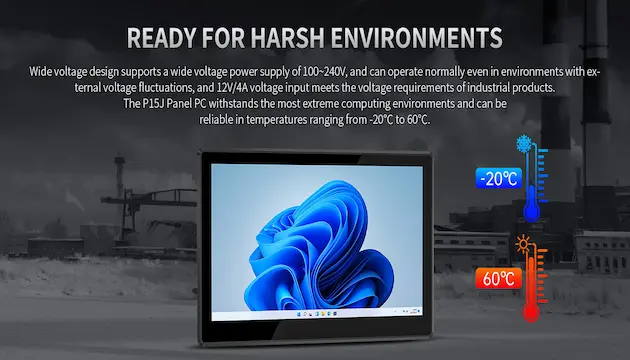
Energy fieldwork spans -20°C to +60°C operating ranges — think frozen rural transformers in winter and rooftop PV monitoring in summer. MIL-STD-810G certification confirms thermal shock resilience, not just steady-state tolerance. That means devices survive rapid transitions — like moving from an air-conditioned service van into direct sun, or from a heated control room onto an icy wind turbine platform — without condensation buildup or touchscreen lag.
From a procurement perspective, MIL-STD-810G compliance signals design rigor beyond basic durability claims. It reflects component-level validation: reinforced hinges, thermal-grade batteries, and sealed I/O ports — all contributing to lower replacement frequency and predictable maintenance cycles. You’re not paying for marketing language; you’re investing in validated field longevity.
ONERugged builds for the conditions described in their industrial PC use cases — real-world deployments where reliability is measured in uninterrupted shift hours, not just uptime percentages. Explore their full line of purpose-built hardware at Onerugged.


评论
发表评论