Rugged Tablets for Energy and Utilities: Sunlight-Readable Displays in Field Operations
Field teams in energy and utilities don’t get the luxury of controlled indoor lighting—or predictable weather. Whether it’s a grid inspector checking transmission lines at noon, a meter reader moving between suburban substations, or a maintenance technician documenting corrosion on offshore infrastructure, device visibility isn’t optional. It’s operational baseline.
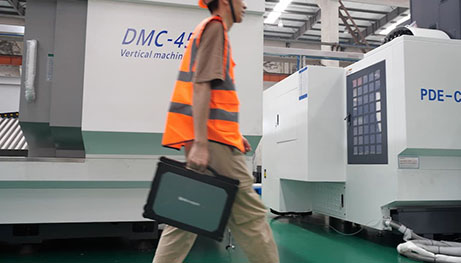
Grid Inspections Under Direct Sunlight with 1200 Nits Display
Standard commercial tablets max out around 500–600 nits—barely legible outdoors on a cloudy day. The Onerugged devices used across utility deployments feature displays rated at 1200 nits. That’s not marketing gloss: it’s measured luminance under sustained load, verified per industry-standard photometric methods. In practice, this means inspectors can verify fault codes, annotate thermal images, or cross-check GIS overlays without shading the screen with a hand or stepping into shadow.
This spec directly supports real workflows—not just ‘outdoor use’ as a vague category. Think: pole-top inspections where climbing time is billable and screen reorientation wastes minutes; or substation walkthroughs where reflective glare off metal enclosures makes low-nit screens functionally blind.
Fleet-Based Meter Reading with Glove-Touch and IP67 Sealing
Meter reading routes rarely pause for ideal conditions. Rain, dust, grease, and cold gloves are routine—not exceptions. The IP67 rating found across Onerugged’s rugged tablets confirms full dust ingress protection and immersion up to 1 meter for 30 minutes. That’s not about surviving accidental drops in puddles—it’s about sustained reliability during multi-hour shifts in coastal humidity or desert sandstorms.
Glove-touch responsiveness isn’t just capacitive sensitivity tuning. It’s calibrated for common utility-issue nitrile and leather work gloves—tested across temperature ranges, not just lab room temps. No need to remove gloves mid-task just to tap ‘submit’ on an automated meter reading (AMR) form.
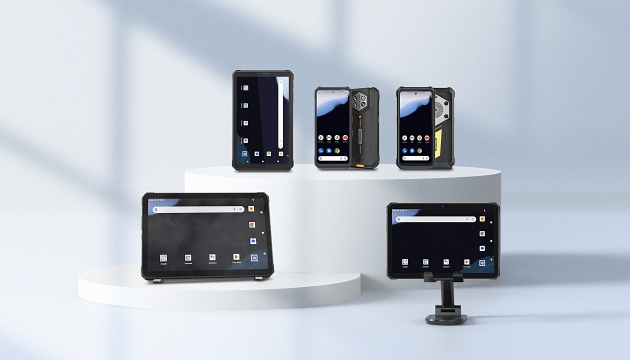
Long-Term Infrastructure Maintenance with MIL-STD-810G Shock Resistance
Maintenance crews carry devices in tool belts, mount them on vehicle dashboards, or rest them on concrete pads beside transformers. MIL-STD-810G shock testing—specifically Method 516.6, Procedure I—simulates repeated 4-foot drops onto plywood over concrete. It’s not about surviving one dramatic fall. It’s about surviving the cumulative micro-impacts of daily handling: setting the tablet down hard on a steel cabinet, jostling during van transit, or bumping against ladder rungs.
That durability translates directly into service life extension—not just fewer breakages, but consistent touchscreen calibration and hinge integrity over 3+ years of field rotation. For procurement teams evaluating TCO, this reduces unplanned refresh cycles and avoids the hidden labor cost of retraining on replacement hardware mid-deployment.
For IT admins managing these devices at scale, the same hardware supports Windows 11 IoT Enterprise, native MDM enrollment, and secure OTA updates—no custom drivers or wrapper layers needed. That interoperability matters when rolling out firmware patches across hundreds of field units before seasonal inspection surges.
Learn how temperature resilience complements these specs in real-world deployments: see our deep dive on extreme temperatures and how they impact battery longevity and display response in northern grid operations. For rail-specific validation, explore how similar ruggedness principles apply in rugged AI PCs for railway inspection.


评论
发表评论