Rugged Tablets for Household Appliance Production with IP65
Manufacturers of home appliances—especially those producing cleaning, kitchen, and personal care devices—face a consistent operational pressure: balancing high-mix, medium-volume production with strict traceability and real-time visibility. In Foshan, Wuhan, and Shanghai factories, one domestic OEM replaced paper-based station logs and fragmented Excel updates with a standardized digital layer built around the Onerugged M80J mobile PC. No pilot phase. No parallel tracking. Just direct replacement at each assembly, test, and packaging station.

Household Appliance Assembly Line with IP65 Sealing
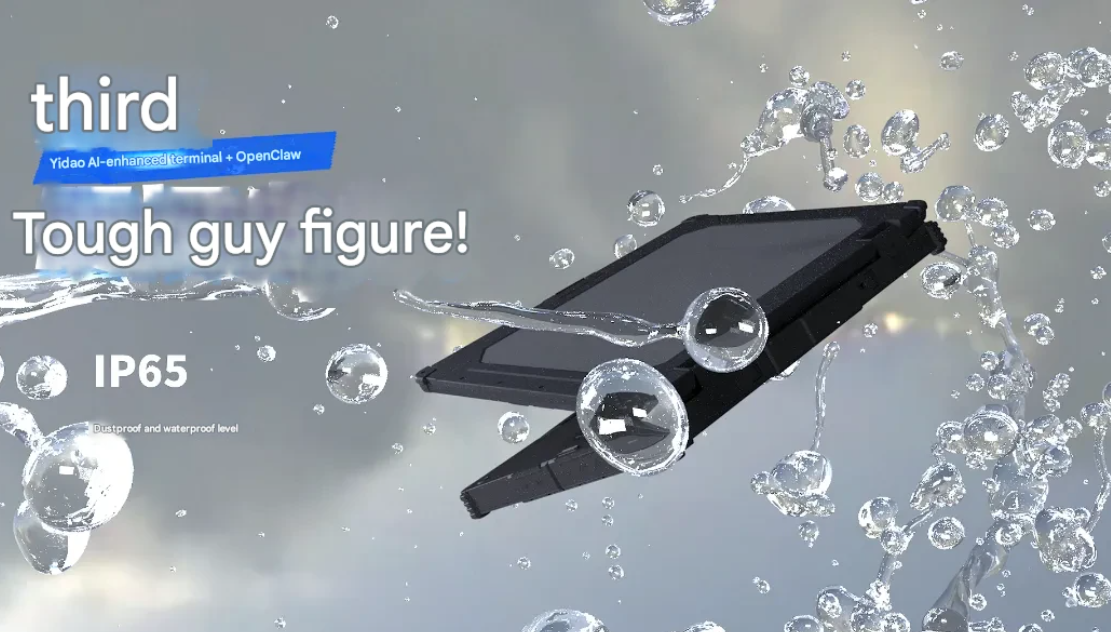
IP65 isn’t just a number on a spec sheet here—it’s what keeps the M80J functional during daily wash-downs near wet-test stations and prevents dust ingress from grinding and polishing operations in metal housing lines. Unlike consumer tablets that fail after weeks of exposure to humid, particulate-laden air, the M80J maintains touchscreen responsiveness and internal component integrity across shifts. The sealed front panel eliminates crevices where lint from vacuum cleaner filter assembly or ceramic residue from induction cooktop production could accumulate and compromise interface reliability.
Production Data Capture with MIL-STD-810H Durability
Factory floors aren’t static labs. Operators move between stations, set devices on metal carts, occasionally bump them against tooling fixtures—or drop them while wearing anti-static gloves. MIL-STD-810H certification means the M80J survives repeated 1.2-meter drops onto concrete, not just one lab-certified event. That translates directly into fewer device swaps, less IT ticket volume for replacements, and no mid-shift downtime waiting for loaners. It also means the unit stays mounted on articulated arms or magnetic brackets without warping or cracking under vibration from nearby stamping presses or conveyor drives.
Why 818g Weight Matters in Daily Use
At 818g bare metal, the M80J sits in the sweet spot between handheld agility and thermal stability. Lighter units often sacrifice battery capacity or structural rigidity; heavier ones fatigue operators over an 8-hour shift. This weight supports all-day use with a removable 5000 mAh battery—no hot-swapping required—and still allows secure mounting in tight spaces like final QA booths or compact sub-assembly cells. It’s not about ‘lightest possible’—it’s about sustained usability without compromising ruggedness.
Real-Time Process Control with Dual-Band Wi-Fi and 4G
Production control systems in home appliance plants rely on stable, low-latency connectivity—not just to the local MES, but to cloud-based analytics dashboards used by plant managers across multiple sites. Dual-band Wi-Fi (2.4 GHz + 5 GHz) handles dense RF environments where dozens of devices operate simultaneously near inverters and motor drives. When Wi-Fi coverage dips near large metal enclosures or shielded test chambers, 4G fallback ensures uninterrupted data flow—critical when capturing pass/fail results from high-voltage safety tests or firmware flash logs.
For teams evaluating hardware for similar deployments, it’s worth cross-referencing rugged laptops for control room use, reviewing how extreme temperatures impact long-term battery health, and comparing field lessons from rugged tablets in high-vibration settings. Each environment stresses different subsystems—and durability is never just about one rating.


评论
发表评论