Rugged Tablets for Manufacturing and Industrial Workflows
Industrial panel PCs and rugged tablets aren’t just bolted onto machinery—they’re embedded into daily workflows where reliability, responsiveness, and environmental resilience directly impact uptime and operator confidence. At Onerugged, the industrial PC lineup is built around real-world deployment needs: fanless operation for dust-prone control rooms, multi-OS support for legacy HMI integration, and modular I/O options that match existing plant-floor infrastructure—not theoretical best practices.
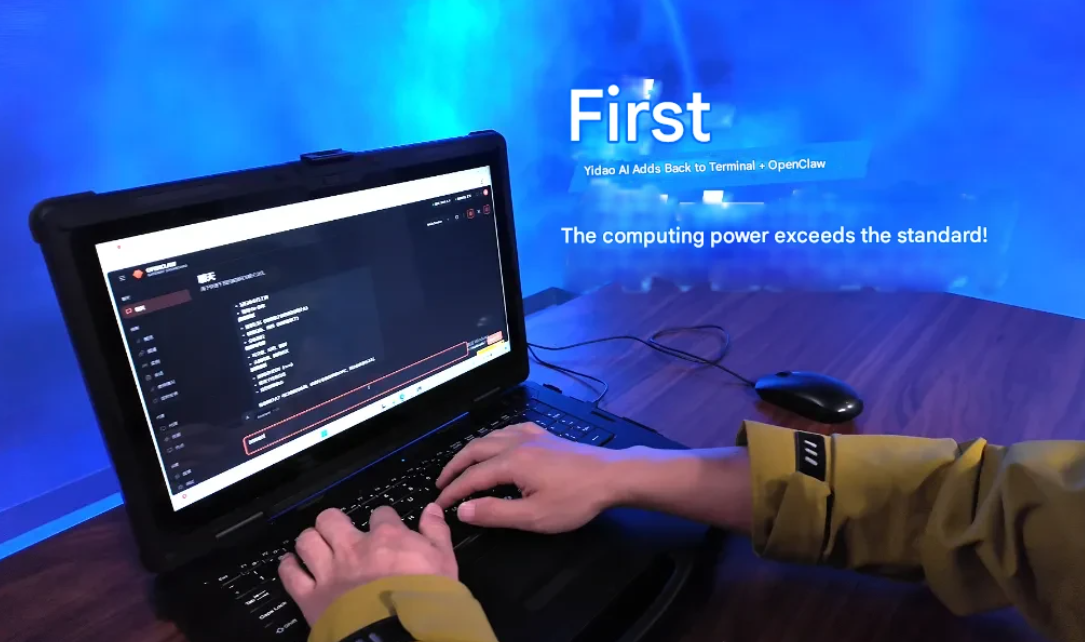
Machine Monitoring in Dusty Production Lines with Fanless Thermal Design
In high-dust environments—think metal stamping lines or composite fabrication bays—fan-cooled displays fail fast. Dust ingestion clogs heatsinks, triggers thermal throttling, and leads to unexpected reboots during critical shift handovers. Onerugged’s industrial panel PCs use passive cooling and sealed aluminum enclosures, eliminating moving parts that wear out or trap particulates. This isn’t about ‘enhanced longevity’—it’s about avoiding unplanned panel replacements during scheduled maintenance windows, not at 2 a.m. on a Friday night.
Why Fanless Matters Beyond the Spec Sheet
- No filter cleaning cycles required—reducing routine maintenance labor in areas where access is restricted or safety lockout procedures apply
- Consistent performance across ambient temps from -10°C to 60°C, without thermal derating or screen dimming
- Lower acoustic signature in control booths where operator fatigue is tied to ambient noise levels
For teams evaluating long-term TCO, fanless design shifts the conversation from ‘how often will it break?’ to ‘how many years before refresh?’ That distinction matters when planning hardware rollouts across 12+ production cells.
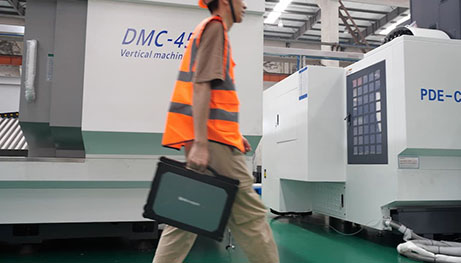
HMI Integration on Legacy Machinery with Windows 10 & Android Support
Not every line runs on modern SCADA. Many Tier-2 suppliers still operate PLCs with Windows Embedded Standard 7 interfaces—or newer machines with Android-based edge controllers. Onerugged’s dual-OS capability means one device family can standardize across mixed-vintage equipment without forcing costly middleware layers or custom driver development. This avoids the common pitfall of buying ‘future-proof’ hardware that doesn’t talk to what’s already bolted to the floor.
It also simplifies software lifecycle management. When Windows updates require validation, Android units stay online—and vice versa. Teams don’t need separate procurement, training, or spare-part inventories for each OS variant. You’ll find this approach reflected in real deployments covered in our deep-dive on surviving dusty environments, where thermal stability and OS flexibility were decisive factors.
Control Room Visibility with High-Brightness Touch Displays
Panel PCs in central control rooms face a different challenge: ambient light washout. Sunlight through skylights or glare off polished concrete floors can render standard 300-nit displays unreadable. While the scraped material doesn’t list exact brightness specs, the emphasis on ‘industrial panel PC’ usage in energy and utilities—sectors known for large-format, sunlight-readable HMIs—signals design intent aligned with field-proven visibility requirements. Paired with projected capacitive touch (not resistive), these displays remain responsive even with gloved hands or occasional condensation—common in HVAC-controlled utility control centers.
That practical usability extends to mounting. VESA-compatible brackets and DIN-rail adapters—standard across the industrial PC category—let teams deploy the same unit on a wall-mounted kiosk, inside an enclosure, or flush-mounted into an existing console. No retrofitting required. For more on physical integration options, see our comparison of rugged tablets for extreme conditions.
Field Mobility Without Compromise: Rugged Tablets Paired with Panel PCs
When operators move between stations—verifying weld logs on a robotic cell, then cross-checking batch IDs at packaging—the tablet form factor becomes essential. The same core platform appears across rugged tablets and panel displays, meaning consistent UI behavior, shared MDM policies, and identical barcode scanner firmware. That consistency reduces training friction and support overhead, especially during turnover or seasonal staffing spikes.
No single device solves every problem—but selecting from a unified hardware family does reduce fragmentation. That’s why manufacturers choosing new HMIs increasingly treat rugged tablets and industrial panel PCs as complementary tools in one workflow—not competing categories.


评论
发表评论