Rugged Tablets for Manufacturing with IP67 Sealing
Manufacturing floor environments demand hardware that doesn’t flinch — whether it’s coolant spray on an assembly line, metal shavings near CNC workstations, or repeated drops onto concrete floors. That’s why IP67-rated rugged tablets are becoming standard issue in production control rooms, maintenance carts, and operator workstations — not as a luxury, but as a reliability baseline.
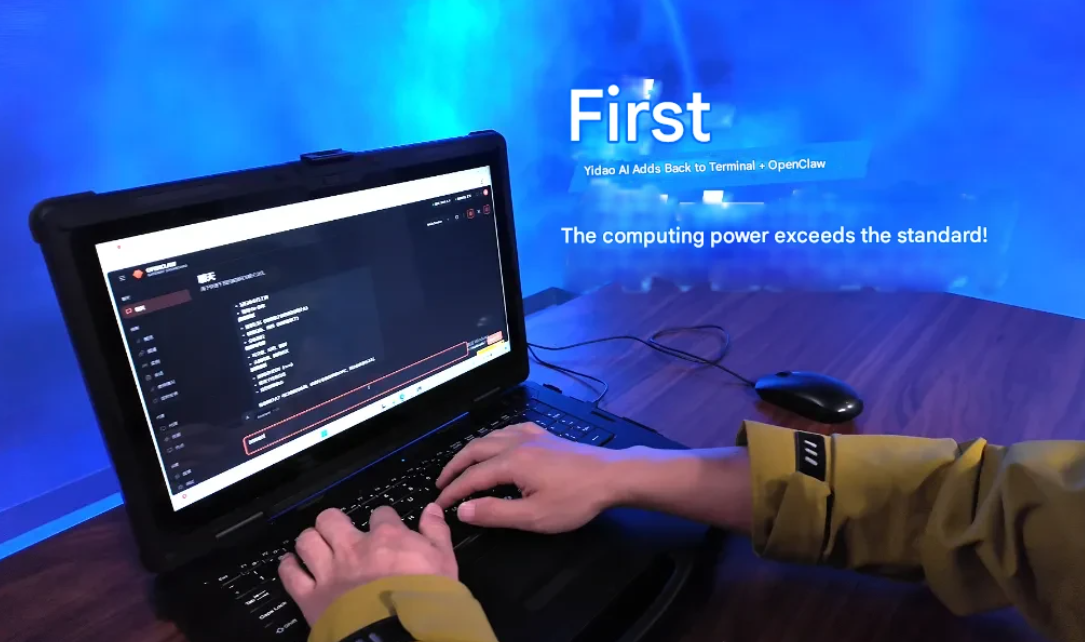
Assembly Line Data Capture with IP67 Sealing
IP67 means full dust ingress protection and immersion up to 1 meter for 30 minutes. In practice, this translates to confidence during washdowns, accidental spills, or high-humidity zones near casting or plating lines. Unlike consumer-grade tablets that fail after one splash, Onerugged devices maintain operation even when wiped down with solvents or exposed to condensation in climate-controlled cleanrooms.
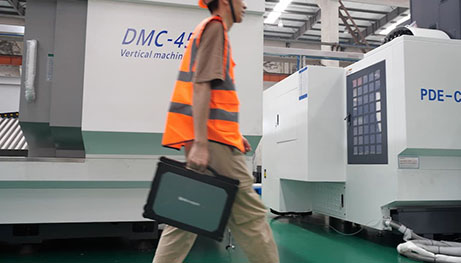
Maintenance Workflow Execution with MIL-STD-810G Shock Resistance
MIL-STD-810G drop testing (1.2m onto plywood) reflects real-world handling — not lab theatrics. Technicians routinely carry tablets while navigating tight machine aisles, climbing ladders, or moving between stations. A unit surviving repeated 1.2m drops means fewer replacements, less downtime logging repair tickets, and no last-minute loaner device scrambles before shift change.
Operator Interface Reliability at 1200 Nits Brightness
1200 nits isn’t about marketing — it’s about legibility under 400-lux overhead LED lighting and direct sunlight through skylights. Operators wearing safety glasses or working near open bay doors need consistent screen visibility without squinting or adjusting brightness manually. This spec directly impacts data entry accuracy and reduces repeat scans or miskeyed batch IDs during SPC reporting.
Why Procurement Teams Prioritize These Specs
From a procurement standpoint, IP67, MIL-STD-810G, and 1200-nit brightness aren’t checklist items — they’re TCO levers. Devices meeting all three typically show measurable reduction in field failure rates versus semi-rugged alternatives. That means fewer warranty claims, lower per-unit support labor, and longer usable life across multi-shift deployments. For teams evaluating options, the durability specs justify the investment — especially when compared against the hidden cost of frequent replacement or workflow interruption. You’ll find deeper context on how rugged tablets reduce long-term ownership costs in public-sector settings — many principles apply directly to discrete manufacturing.
Temperature Resilience in Real Production Environments
Manufacturing spaces often exceed ambient office ranges — from unheated winter warehouses to foundry-adjacent staging areas. The ability to operate reliably across -20°C to 60°C isn’t theoretical: it ensures barcode scanning remains responsive during cold-start shifts and touch response stays accurate near heat-generating equipment. See how thermal performance drives uptime in demanding conditions in our deep-dive on extreme temperature resilience.
Connectivity & Integration for Shop Floor IT
Wi-Fi 6 and optional 5G support ensure stable connection handoffs between access points in large facilities — critical for MES or CMMS updates pushed to mobile workstations. USB-C and legacy RS232 ports allow direct integration with PLCs, label printers, and legacy test equipment without dongle dependency. And because these units ship with Linux Terminal and MDM SYSTEM support, IT teams can enforce policies, push OTA updates, and manage kiosk mode remotely — reducing desk-side visits by maintenance staff.
For retail teams balancing mobility and durability, the same platform architecture powers proven workflows — see how industrial PC deployment patterns translate across verticals.


评论
发表评论