Rugged Tablets for Energy and Utilities with Sunlight-Readable Displays
Field teams in energy and utilities don’t get the luxury of controlled indoor lighting — they’re inspecting substations at noon, scanning meters in desert heat, or checking grid assets under overcast rain. When device screens wash out or freeze mid-task, work stops. That’s why sunlight readability isn’t a nice-to-have: it’s non-negotiable operational infrastructure.

Real-Time Grid Inspections with 1200 Nits Sunlight Readability
ONERugged’s rugged tablets built for energy and utilities feature displays rated at 1200 nits — not just 800 or 1000. In direct sun, that extra brightness preserves contrast and legibility without forcing users to shade the screen with their hands or seek cover. It’s especially critical during visual inspections where misreading a voltage reading or status icon could delay response time or trigger unnecessary escalation.
This isn’t about marketing specs. It’s about how long a technician can stay on-site without squinting, repositioning, or stepping into shade to confirm a reading — all while wearing gloves and working against time-sensitive maintenance windows.
Why 1200 Nits Matters in Outdoor Workflow Handoffs
- Reduces eye fatigue during multi-hour field shifts — no screen dimming or auto-brightness lag between shaded and exposed zones
- Maintains touch responsiveness even when the display surface heats up in ambient temps above 40°C
- Works reliably with standard-issue utility-grade gloves (not just thin synthetic ones)
- Eliminates need for supplemental screen hoods or aftermarket anti-glare films that degrade over time
For procurement managers evaluating total cost of ownership, this spec directly reduces rework caused by misread data entries, repeat site visits, or delayed reporting cycles. You’re not paying for brightness alone — you’re paying for fewer verification steps and tighter SLA adherence in remote asset management.
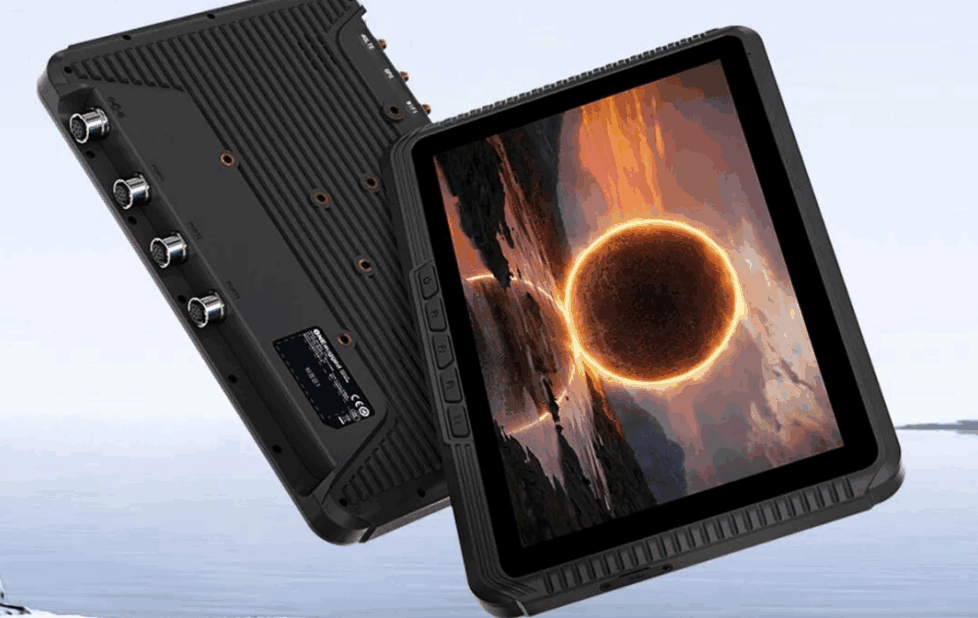
Extreme Outdoor Environments and IP67 Sealing
Dust, humidity, salt spray, and incidental water exposure aren’t edge cases in utility operations — they’re daily conditions. ONERugged’s devices for energy and utilities are sealed to IP67, meaning full protection against dust ingress and immersion in 1 meter of water for up to 30 minutes. That rating holds across thermal cycling — no condensation buildup inside the chassis after moving from air-conditioned trucks to humid switchyards.
Unlike consumer-grade tablets retrofitted with third-party cases, these are engineered as integrated units: gasketed ports, sealed speaker grilles, and reinforced bezels around the display. The result? Fewer service calls, longer mean time between failures, and consistent performance across seasonal extremes — from sub-zero winter patrols to summer monsoon inspections.
If your team deploys rugged tablets for automated meter reading or grid inspections, this level of sealing eliminates one major failure vector before it starts.
Fleet Maintenance and On-Site Operation with MIL-STD-810G
MIL-STD-810G certification covers more than drop testing. For utility crews operating from bucket trucks, service vans, or uneven terrain, it validates resistance to vibration, shock, and temperature shock — all tested across real-world duty cycles, not lab-only simulations.
When a tablet is mounted near an engine bay or stowed in a vibrating tool compartment, MIL-STD-810G compliance means the device stays responsive and stable — no unexpected reboots, no sensor drift, no corrupted logs. That consistency feeds directly into your MDM system’s reliability and audit readiness.
For teams managing mixed fleets of vehicles and handhelds, pairing rugged tablets with ONERugged’s Onerugged MDM SYSTEM ensures secure, scalable configuration — especially important when deploying standardized inspection workflows across regional crews.
Industrial PC Integration for Smart Hanging Systems
Some utility deployments go beyond handhelds — think smart hanging systems at substations or control rooms using panel-mounted industrial PCs. The Onerugged D10R Industrial Panel PC integrates cleanly into those fixed environments, offering the same core ruggedness (IP67, 1200 nits, MIL-STD-810G) but in a form factor built for permanent mounting and 24/7 operation. Its fanless design avoids dust clogging, and its wide operating temperature range handles unconditioned enclosures.
That kind of hardware continuity — same OS support, same security model, same service lifecycle — simplifies IT’s job across mobile and fixed assets. You’re not managing two device families with separate patching schedules and spare parts inventories.
For deeper technical comparisons across use cases, explore our earlier coverage of industrial PC deployment patterns in logistics and manufacturing — many of the same durability and integration principles apply directly to utility infrastructure modernization.


评论
发表评论