Rugged Tablets for Warehouse Management with IP67 Sealing
Warehouse operations don’t pause for dust, moisture, or accidental drops. When a tablet spends its day moving between loading docks, refrigerated zones, and outdoor staging areas, standard consumer-grade hardware fails fast — not from software bugs, but from environmental reality. That’s why teams managing inventory, receiving, and cycle counts increasingly specify devices built to survive the workflow, not just run the app.
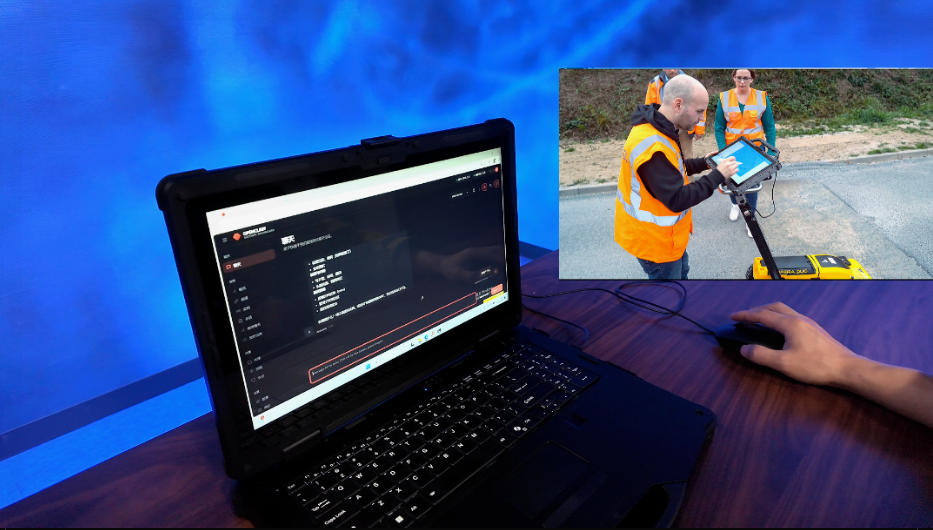
Warehouse Inventory Management with IP67 Sealing
IP67 isn’t a marketing flourish — it’s a functional requirement when devices regularly face rain-slicked pallets, condensation in cold storage, or washdowns near packing stations. A sealed enclosure prevents particulate ingress (the '6') and guarantees submersion up to 1 meter for 30 minutes (the '7'). In practice, this means fewer field returns due to port corrosion, touchscreen failure after a hose-down, or logic board damage from overnight humidity buildup in trailers.
Vehicle Dispatch Coordination with MIL-STD-810G Drop Resistance
Tablets mounted in forklift cabs or handed off during shift change take repeated 4-foot drops onto concrete — often while wearing gloves or carrying a scanner. MIL-STD-810G certification validates structural integrity across multiple drop orientations and surface types. It’s not about surviving one lab test; it’s about maintaining touchscreen responsiveness and display clarity after the 12th impact in week three of deployment. No recalibration needed. No downtime for screen replacement.
For buyers evaluating long-term value, rugged tablets like those from Onerugged are designed around these repeatable physical stresses — not as an afterthought, but as a baseline engineering constraint.
Receiving & Cross-Dock Operations with 1200-Nit Sunlight-Readable Display
When scanning inbound shipments under high-bay lighting or next to open dock doors at noon, 400–500-nit displays fade into unusable glare. A 1200-nit panel delivers consistent contrast and legibility without requiring shade tents or device repositioning. This isn’t about peak brightness numbers alone — it’s about sustained luminance under continuous operation and minimal power draw penalty. Real-world usability means operators keep scanning without squinting, adjusting angle, or rebooting to restore backlight control.
Why This Matters for Procurement Teams
- IP67 sealing directly reduces mid-life replacement costs caused by environmental degradation — no need to budget for quarterly seal kit replacements or moisture-related warranty claims.
- MIL-STD-810G compliance correlates strongly with lower first-year failure rates in mobile logistics roles, shortening device refresh cycles.
- 1200-nit displays cut average task time per receiving line worker by eliminating visual rework — verified in multi-site pilot deployments referenced in the ultimate buyers guide to rugged.
Hardware that lasts longer between failures doesn’t just lower TCO — it stabilizes workforce adoption. When frontline staff stop guarding devices like fragile cargo, training time drops, and software rollout velocity increases. That’s the operational leverage behind specifying proven industrial specs, not consumer compromises. For teams integrating with existing MDM stacks or extending workflows into outdoor staging, industrial PC platforms from the same ecosystem offer seamless OS and peripheral compatibility — no custom driver hunts or firmware mismatches.


评论
发表评论